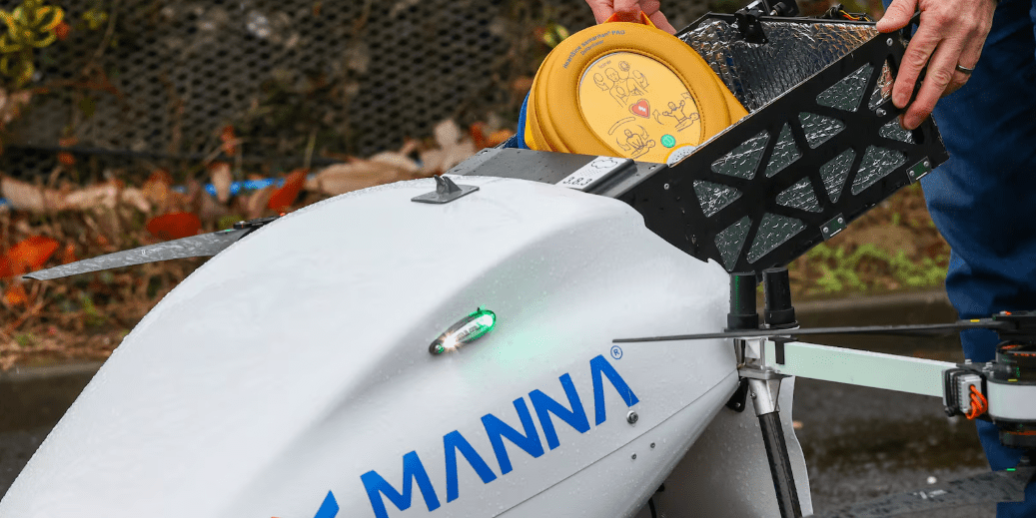
In the past few years, drone deliveries have leapt from a concept in science fiction to an actual service — and in Ireland, artificial intelligence is driving this expansion. From fast food drone deliveries in Dublin to grocery drops in rural Galway, AI is revolutionizing the way goods are delivered to homes. However, while the opportunities are significant, so are the obstacles. This blog explores the landscape, advantages, risks, and regulatory framework of drone deliveries in Ireland from the perspective of AI.
The Current Landscape: Drone Deliveries in Ireland:
- Leading operators: A key player in this field is Manna Aero, which has been conducting trials for drone delivery in locations such as Oranmore (Galway), Balbriggan, and certain areas of Dublin.
- Licenses & Certifications: Manna was awarded the first Light UAS (Unmanned Aircraft Systems) Operator Certificate (LUC) by the Irish Aviation Authority (IAA), allowing it to comply with EU drone regulations. This paves the way for operations throughout Ireland and other EU countries.
- Recent collaborations and trials: Deliveroo has teamed up with Manna to test AI-enabled drone food delivery in Dublin 15. The aim is to accelerate customer delivery and decrease dependence on road traffic. Manna has secured considerable funding (around €27-30 million) to facilitate growth, which includes additional testing in the Nordic regions.
How AI Enables Drone Deliveries In Ireland ?
- Self-directed navigation and obstacle detection: AI algorithms analyze information from sensors and cameras to identify obstacles (such as trees, wires, and birds), map safe routes, and modify paths in real-time.
- Route planning and predictive modeling: Machine learning techniques assist in planning efficient flight routes, considering factors like weather conditions, wind, traffic on the ground (for take-off and landing areas), delivery demands, energy usage, and drone battery status.
- Management of fleet and scalability: AI facilitates the coordination of numerous drones, managing scheduling, upkeep, battery charging/swapping, ensuring safety protocols, and enhancing delivery hubs. A single control operator can oversee many drones, as demonstrated in trials.
- Data processing, computer vision & landing precision: AI empowers precise hovering, lowering of packages, sometimes using ropes or tethers, with vision‐based systems ensuring that the drop zone is clear and aligned.
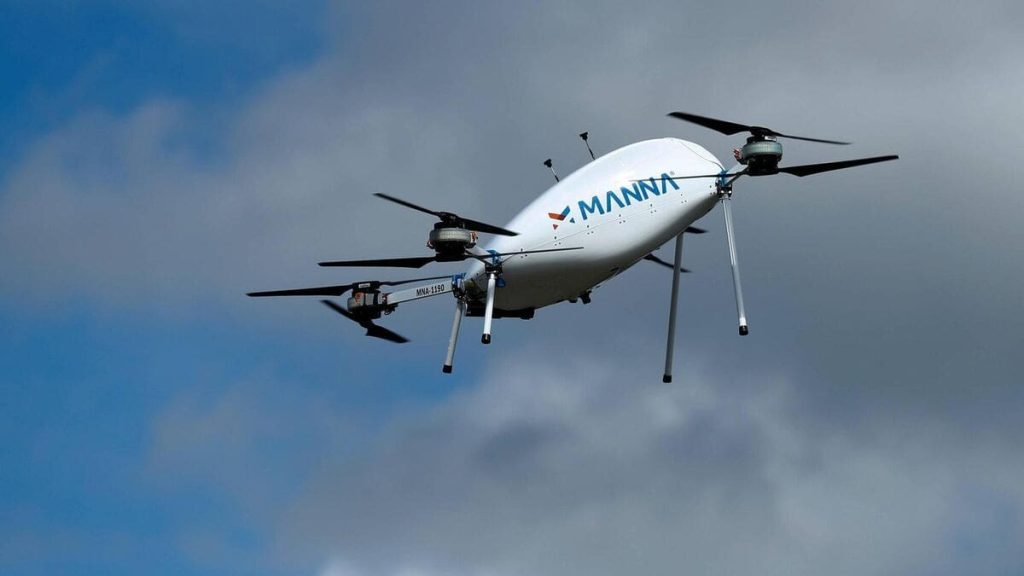
Benefits of Drone Deliveries with AI in Ireland:
- Speed & convenience : Drone deliveries significantly decrease the time taken for delivering small, urgent items (such as food, medications, and groceries) by avoiding road traffic and delays. In experimental trials, some nearby deliveries have been completed in less than three minutes.
- Environmental gains: The reduction in van or motorbike trips leads to lower emissions. For lightweight deliveries over short distances, the energy consumption per delivery can be minimized. AI optimises route efficiency and battery usage, further improving environmental benefits.
- Accessibility for remote & rural areas: Areas that struggle with traditional logistics due to distance or challenging terrain can gain advantages, especially when AI helps in navigating tough routes, adapting to weather changes, and overseeing autonomous operations. Trials conducted in rural Ireland have already shown positive results.
- Economic opportunities & innovation leadership: Ireland has become a hub for drone delivery innovation, attracting investment, demonstrating regulatory readiness, and potentially becoming a leader in AI‐integrated last‑mile logistics. This creates jobs, opens new business models, and positions Ireland well in the EU AI ecosystem.
Challenges & Risks from the AI Perspective
While the promise is large, several AI‑related and regulatory risks must be addressed:
- Safety & reliability: AI systems are not without faults. Failures in sensors, unforeseen obstacles, poor weather conditions (such as wind and rain), or software glitches could result in navigation errors. It is crucial to implement redundancy, fail-safe systems, and conduct regular testing.
- Privacy concerns: Drones frequently come equipped with cameras and sensors; to assess landing zones or identify obstacles, they may transmit video footage. Residents have expressed worries about what is being recorded and the methods of data storage or usage.
- Noise and public nuisance: Even with optimized flight paths created by AI, drones generate noise. In urban neighborhoods, there are concerns from residents about the constant presence of drones being disruptive.
- Bias, equity & access issues: If AI models are trained on limited data, certain regions (e.g. rural vs urban) may be underserved. Also possibility of favouring affluent areas. There’s also risk that drone deliveries in ireland mainly serve profitable routes, leaving out low‑profit but socially meaningful ones.
- Cybersecurity: Drone systems need strong protection against hacking, spoofing, or control hijack. AI systems increase the attack surface (communication links, sensor data, control software).
- Regulatory lag: Regulations need to keep pace: both national (IAA, Transport Dept) and EU levels (e.g. the recent EU drone rules, the AI Act) need clarity. There are gaps around noise regulation, community consent, environmental burden.
Regulation, Policy & Public Perception
- EU & Irish regulation:
- The EU has introduced updated drone regulations; in Ireland, the IAA has granted Light UAS Operator Certificates (LUCs).
- Ireland is also among the front‑runners for implementing the EU AI Act, designating competent authorities for enforcement, balancing innovation and safeguards.
- Public feedback, community concerns:
- Noise and privacy are top concerns in many Dublin neighbourhoods. Local councillors have called for frameworks to limit noise, visual intrusion, and give residents more say.
- Some fear a “dystopian future” if drone activity escalates without oversight. Others see drone delivery as beneficial especially for urgent or remote access.
- Policy gaps:
- While safety and air traffic regulation exist, specifics on noise levels, flight paths over private property, data collection, and local planning approvals are less defined.
- Community consultation and transparency are needed: where will hubs be located? What times will drones fly? How will data (images, video) be used?
What the Near‑Future Looks Like?
Here are likely developments in the next few years as AI and drone delivery continue intersecting in Ireland:
- Scaled roll‑outs in urban and suburban zones, especially where traffic congestion is worst and small‑basket deliveries are common.
- Further refinement of AI: better obstacle avoidance, improved landing precision, quieter drone motors, adaptive noise control, enhanced autonomy under variable weather.
- More partnerships between tech, logistics, and retail/food sectors (e.g. more with Deliveroo, Just Eat, local grocers).
- Stronger regulation regarding noise, privacy, and rights of citizens; possible zoning laws for drone corridors or no‑fly zones over private property.
- Integration with other smart systems: edge computing, IoT, 5G connectivity to improve latency, safety, real‑time data sharing (weather, air traffic), and emergency responses (e.g. medical supply deliveries).

Conclusion
Drone deliveries in ireland, powered by AI, represent an exciting frontier for Ireland. They offer speed, environmental benefits, and improved access — especially in remote and rural areas. But to unlock that potential responsibly, stakeholders must balance innovation with safety, privacy, noise mitigation, and fairness. For Ireland to become a global leader, it needs not just technological advancement but wise regulation, robust AI governance, and meaningful public engagement.
By combining the right mix of policy, AI capabilities, and community trust, Ireland’s skies could truly become smarter, cleaner, and more connected.
Also Read – Powerful AI Presents: Waymo Driverless Transportation in the U.S