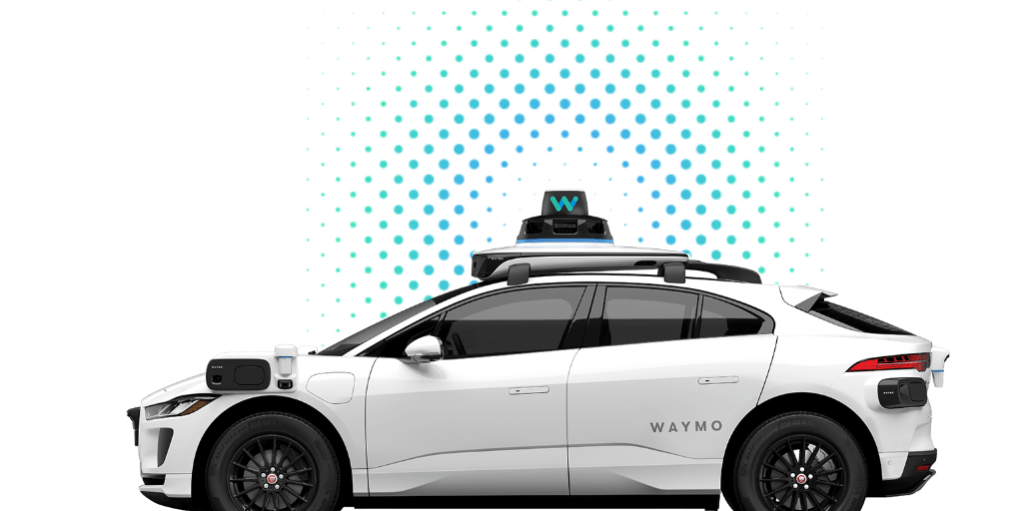
Imagine summoning a taxi and getting a fully autonomous car—no driver, no steering wheel—but still arriving safely and on time. This is no longer science fiction: Waymo, a subsidiary of Alphabet Inc., is making that a reality in several U.S. cities. In this blog post, we explore how Waymo driverless transportation service works, where it’s operating, its advantages, challenges, and prospects for growth.
What Is Waymo and How Does Its Driverless Taxi Work?
Waymo began as Google’s self-driving car project and spun off into its own company in 2016. Its mission: to build the world’s most trusted, safe and accessible autonomous ride‑hailing service.
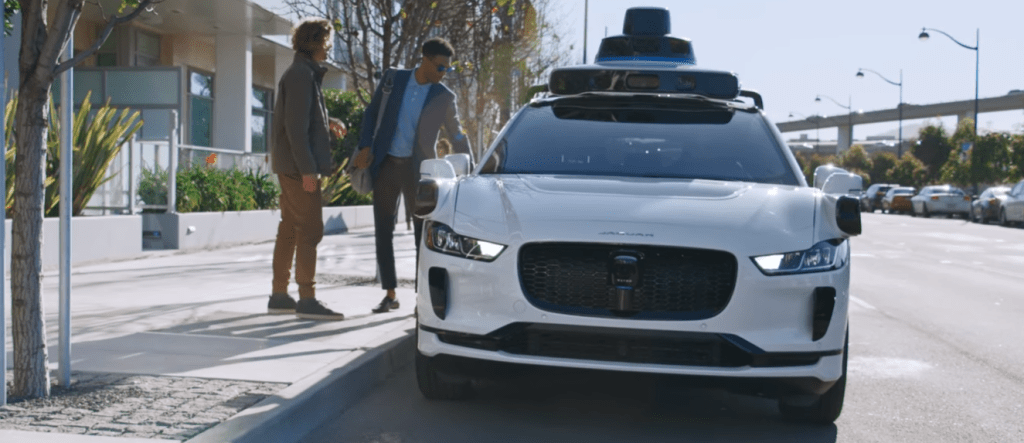
Waymo’s service is known as Waymo One. Riders use an app to request a ride; the system sends the nearest Waymo vehicle equipped with sensors, cameras, LIDAR, and advanced AI driving software (the “Waymo Driver”) to pick up the passenger and navigate to the destination.
Initially, Waymo driverless transportation taxis use vehicles with safety drivers (human backup drivers). Over time, the company has phased in rider-only, fully driverless operations in certain service zones.
Waymo driverless transportation aims to generalize its autonomous driving software across platforms (i.e. the “Waymo Driver” can be deployed on different vehicle models, not just one type) so that the same core technology scales across many vehicles.
Cities And Coverage: Where Waymo Operates:
Waymo has gradually expanded its footprint across the U.S. Here are key markets and recent growth:
- Dallas, Texas (future): Waymo plans to start robotaxi service in Dallas in 2026, in partnership with Avis.
- Phoenix, Arizona: One of the first large-scale operations. In the Phoenix metro area, Waymo One covers hundreds of square miles.
- San Francisco, California: Waymo opened driverless taxi service to all users citywide in mid‑2024, with no waitlist.
- Los Angeles, California: Waymo expanded coverage in LA to about 80 square miles, also removing waitlists so anyone in that area can hail a ride.
- Austin, Texas: Waymo began operations in Austin, deploying fully autonomous rides in selected zones.
- Atlanta, Georgia: Waymo expanded its partnership with Uber to make Waymo robotaxis accessible via Uber’s app in Atlanta.
- Washington, D.C. and Miami (planned): Waymo is actively working with regulators and mapping roads in Washington, D.C. to launch in 2026. Miami is also on the expansion roadmap.

In many cities, Waymo has integrated with Uber: riders hail via the Uber app, and Uber handles dispatching and fleet logistics, while Waymo handles the autonomous driving and maintenance.
Why Waymo Driverless Transportation Matters?
Safety
One of Waymo’s strongest selling points is improved safety. In a recent study of over 56.7 million rider-only miles, Waymo’s crash rate for injury‑reporting and serious‑injury events was statistically lower than comparable human benchmarks.
Another comparative study found that across millions of miles in fully driverless mode, Waymo had zero bodily injury claims, compared to a baseline rate for human drivers. Property damage claims were also significantly reduced.
These safety metrics help make the case that autonomous systems, when well-engineered and monitored, can outperform human drivers in consistency and risk management.
Environmental Impact & Electrification
Waymo’s fleet is fully electric (e.g. Jaguar I-PACE models), meaning that every ride is emission-free at the tailpipe.
Because vehicles are shared and used more efficiently, the concept of “mobility as a service” may reduce the number of individually owned cars, potentially lowering congestion and emissions.
Accessibility and Convenience
Driverless taxis can run 24/7 without breaks, offering more consistent coverage, especially during off-peak hours. They may also help bridge “last-mile” gaps in public transport and improve mobility for non-drivers, the elderly, or those with disabilities.
Business and Corporate Use
To capture recurring demand, Waymo introduced Waymo for Business—allowing companies to set up accounts so employees can use robotaxis for work travel, with management tools and usage reporting.
They also aim for stronger airport connectivity, integrating robotaxi rides with air travel.
Challenges and Limitations:
Regulation & Policy:
- One of the biggest hurdles is legal and regulatory approval. Many U.S. jurisdictions still lack clear rules for fully autonomous vehicles. Waymo must work with local governments, regulators, and safety agencies to get permits.
- For example, in D.C. and Miami, Waymo’s vehicles currently must include a safety driver or be in a mapping/testing phase. Fully driverless service is contingent on regulatory permission.
Technical Edge Cases & Weather:
- Autonomous driving systems are excellent in well-mapped, structured environments, but struggle with more chaotic or unpredictable scenarios—heavy snow, extreme rain, unexpected roadworks, or unusual infrastructure. Waymo continues to train and test in diverse environments.
Public Perception & Trust:
- Many people are still uneasy about riding in a car with no driver. Incidents involving AVs in the media raise caution. Waymo mitigates this by transparency, detailed reporting, and user feedback loops.
Scalability & Costs:
- High costs in sensors, compute hardware, mapping, redundancy, fleet maintenance, insurance, and operations mean that scaling to many cities is capital-intensive. Also, balancing fleet supply and demand is complex (idle vehicles, re-positioning, depot management).
Outlook: The Future Of Waymo And Driverless Taxis
The roadmap ahead is promising:
- Expansion into new cities: Washington, D.C., Miami, Dallas, and others are next.
- More integration with ride‑share platforms: Uber partnerships will widen access in more markets.
- Increased adoption and user volume growth: Waymo reports over 1 million rides per month in some markets.
- Continued safety advancement through data-driven AI improvements.
- Diversification: Although Waymo is focusing on ride-hailing, it may also extend to logistics, last‑mile delivery, or autonomous trucking in the longer term.
If these ambitions come together, the U.S. could see a transportation transformation where autonomous ride-hailing becomes a standard mobility option across metro areas.
Conclusion:
Waymo driverless transportation taxi service represents one of the most advanced real-world deployments of autonomous vehicles in the U.S. By combining safety gains, electric technology, on-demand convenience, and strategic partnerships, Waymo is carving out a pioneering path in the future of mobility.
For travelers, urban planners, tech enthusiasts, and policymakers, Waymo driverless transportation is not just a novelty—it’s a real test of how society might move in the coming decades. While challenges remain, the pace of expansion and improvements suggests that driverless taxis will increasingly shift from experimental to mainstream.
Also Read : Discover Google AI Plus — Powerful AI Features with Extra Storage